Posts

Skewness, Hope and Bubbles
Image
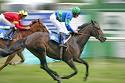
As economists Joseph Golec and Maurry Tamarkin have shown in [1], studies of horse race betting have empirically established a long shot anomaly ; that is, low-probabiliy, high-variance bets (long shots) provide low mean returns and high-probability, low variance bets provide relatively high mean returns. Because bettors willingly accept low-return, high-variance bets, researchers conclude that bettors are risk lovers. In their study, Golec and Tamarkin show that the data are at least as consistent with risk aversion as they are with risk loving when one explicitly considers the skewness of bet returns. Because the variance and skewness of bet returns are highly correlated, bettors may appear to prefer variance when it is skewness that they crave . For the same reason some investors may be easily over-attracted by new financial products (CDOs, commodities) or new industrial sectors: the Dot-Com sector between 1995 and 2001. This new investment support may have no track record, even neg...
LongConvexity News (update 02.11.08)

Image

LongConvexity Strategy

Image
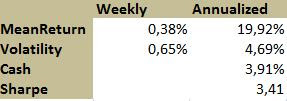
Using a risk-driven optimization scheme (see RaisePartner ) over a multi-class investment universe, LongConvexity quantitative model produces attractivity signals that are asymmetrically leveraged taking long gamma positions on the corresponding calls or puts options. Total maximal optional exposure remains below 20% of the invested capital - remaining exposure is short term European treasury.

Where do Black Swans come from?

Image
Since the released of Nassim Taleb's book "The Black Swan: The Impact of the Highly Improbable" in 2007 during the subprime crisis , the elegant-but-mysterious bird has become the symbolic representation of abnormal dangerous events, deviations from normality or heavy tails . Since then the Gallina has become more threatening than a whole assembly of market bears - it represents what hits you more because it is the threat you cannot see, you cannot measure, you cannot compute! All the algorithms and high performance of all modern quant-technology inspired by the wise men like Gauss, Black or Scholes are of no use against the inaccessible powers of the magic bird. From Black & Scholes to Black Swans In another era "the BS conditions" were standing for "Black & Scholes" conditions assuming "log-normality" of returns and constant volatility. Now that the monster has appeared "the BS conditions" are likely to take a new signifi...

The metaphor of "The Newspaper Competition"

Image
Professional investment may be liked to those newspaper competitions in which competitors have to pick out the six prettiest faces from a hundred photographs, the prize being awarded to the competitor whose choice most nearly corresponds to the average preferences of the competitors as whole; so that each competitor has to pick, not those faces he himself finds prettiest, but those which he thinks likeliest to catch the fancy of the other competitors, all of whom are looking at the problem from the same point of view. It is not a case of choosing those which, to the best of one's judgment, are really the prettiest, nor even those which average opinion genuinely thinks the prettiest. We have reached the third degree where we devote our intelligences to anticipating what average opinion expects the average opinion to be. And there are some, I believe, who practise the fourth, fifth and higher degrees. If the reader interjects that there must be surely large profits to be gained f...

La fin de la bulle dollar ?

Image
Avec la publication la semaine dernière d’un indice des prix à la consommation (CPI) américain moins élevé qu’attendu, le dollar a amorcé un nouveau mouvement de baisse. Sur une base annuelle l’inflation est en effet ressortie à 3,9% : un chiffre en dessous des craintes des acteurs du marché qui en ont déduit un peu rapidement que la Réserve fédérale pourrait ainsi garder son taux directeur à 2% durablement. Cette nouvelle baisse du dollar ressemble toutefois à une réaction assez impulsive du marché. En effet une analyse plus fine de la dynamique de l’inflation laisse apparaître une inflation en forte accélération. Le CPI publié agrège aussi bien des données récentes que des données remontant au printemps 2007 avant la flambée des matières premières et agro-alimentaires. De ce fait la dynamique réelle court terme de l’inflation est lissée. Sur les 3 derniers mois, le CPI a en réalité progressé de 1,2%, soit à un rythme annuel de 4,8% !! L’efficacité des mécanismes d’urgence mis en...

Après la crise financière, Ben Bernanke pourrait se concentrer sur l’inflation…

Image
Le comité de la Réserve fédérale américaine (FOMC) se réunit mardi et mercredi cette semaine. La Fed devrait, tout en baissant une dernière fois son taux directeur, annoncer la fin du cycle baissier entamé en septembre dernier ! Son président Ben Bernanke traite en effet une urgence après l’autre : la première depuis le mois d’août était celle de la crise des subprimes et les risques d’effondrement du système financier américain. En baissant les taux d’intérêts progressivement de 5,25% à 2,25% de septembre 2007 à mars 2008 et en apportant un soutien fort aux banques américaines, l’administration américaine semble avoir enrayée la crise financière. Les mauvaises nouvelles tombent et continueront de tomber pendant quelques mois mais ne surprennent plus les marchés. L’économie réelle est sérieusement touchée mais les confirmations factuelles du ralentissement économique dépassent de moins en moins souvent les anticipations des opérateurs… Le président Ben Bernanke va donc pouvoir se conce...